Cedar Falls Epoxy Flooring brings more than 20 years of floor coating experience to every metallic epoxy floor we install in Cedar Falls, IA, serving surrounding cities including Waterloo, Evansdale, Waverly, Independence and Oelwein. A metallic floor uses reflective pigments that drift and swirl in the wet epoxy to create a marbled, three-dimensional finish, and it is the most design-driven floor we put down.
It is also the least forgiving. A metallic coat shows every high spot, patch and pinhole in the slab beneath it, and it has to be worked quickly and deliberately before it sets. That is why the slab work and testing under a metallic floor matter just as much as the artistry on top.
We install metallic floors in finished basements, home bars, showrooms, offices and salons. We also tell people when a metallic floor is the wrong choice for a room, which is most often a working garage.
How a Metallic Epoxy Floor Is Built
Ground Slab, Primer and Base Coat
Every metallic floor starts with a diamond-ground slab, prepared to the surface profile named in the proposal, with cracks and spalls filled and ground flush. A primer seals the concrete so air does not rise out of it and pop bubbles through the metallic layer.
A tinted base coat goes on next. Its color sets the background tone for the metallic coat and has a large effect on the final look, so we choose it together with the pigment.
The Metallic Pigment Coat
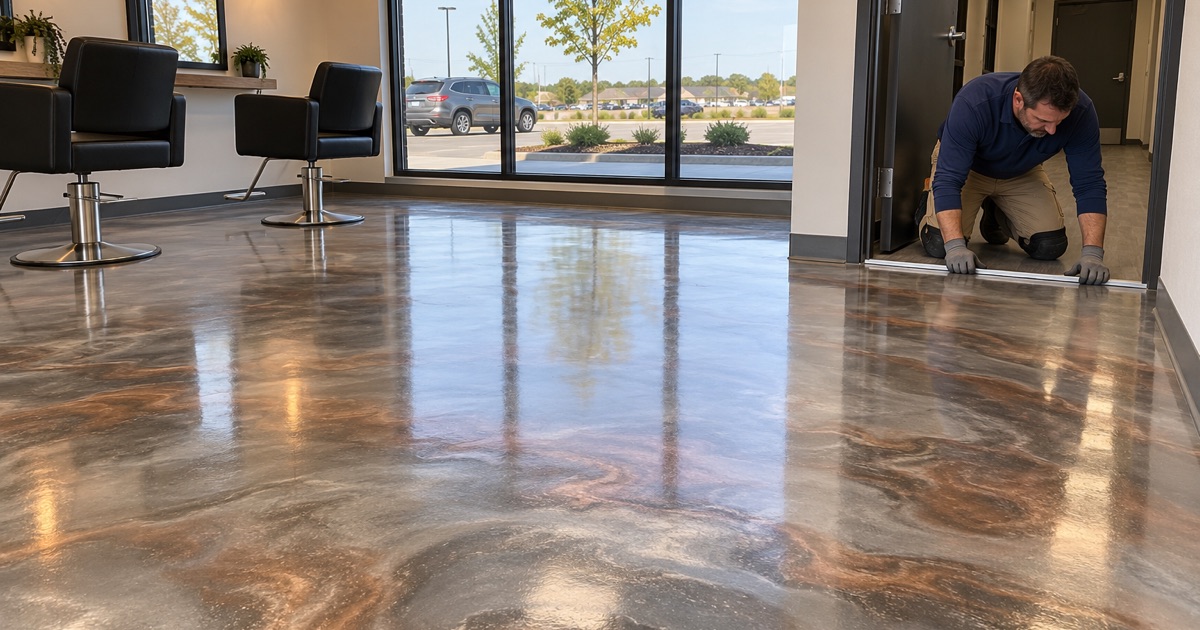
The metallic coat is a clear epoxy loaded with reflective pigment, poured and worked across the floor while it is wet. Rollers, trowels, brushes and sometimes solvent sprays move the pigment to create veining, cells and depth.
This is the stage where experience shows. The material has a limited working time, so the crew plans the room, mixes in batches and keeps every edge wet to avoid visible seams.
UV-Stable Clear Topcoat
Standard epoxy can amber when exposed to sunlight, and on a decorative floor that yellowing shifts every color in the pattern. We seal metallic floors with an aliphatic polyaspartic or urethane clear coat that resists ultraviolet light.
The topcoat also takes the everyday wear from shoes, chairs and cleaning. It can be renewed later without disturbing the metallic layer below.
Where Metallic Floors Work Best
Finished Basements and Home Bars
Metallic epoxy is one of the most popular choices for basement family rooms, bars and theaters. It gives a high-end look over a concrete slab, cleans easily and pairs well with area rugs.
Before we commit a basement to a metallic floor, we read it for past water and test the slab for moisture. A metallic coat that blisters from vapor below is far more noticeable than a flake floor with the same problem.
Showrooms, Offices and Salons
In customer-facing spaces, a metallic floor becomes part of the design. Businesses often match the colors to their brand, and borders or saw-cut lines can frame displays or reception areas.
We plan commercial work around opening hours and provide the insurance certificate a building owner or permit office asks for. Where a space cannot close for the several days a metallic floor takes, we phase the room or schedule the work across a long weekend.
Why Working Garages Are Usually a Poor Fit
In a garage that sees winter driving, metallic floors show salt residue, tire marks and scratches more readily than flake systems. They are also smoother underfoot when snow melts off the car, and a high gloss shows every speck of grit.
For most Cedar Falls garages we recommend a flake system instead. A heated showroom garage that rarely sees salt is a different case, and a metallic floor can look excellent there.
The Slab Under a Metallic Floor
Flatness, Patches and Old Coatings
Because metallic floors are reflective, any dip, ridge or patch catches the light. We grind high spots and lips at joints, fill low areas and remove every trace of old paint, sealer and tile adhesive before the primer goes down.
On very uneven slabs, a self-leveling underlayment may be needed first. We will tell you if the floor needs that step to get the finish you are expecting.
Moisture Testing Before Pricing
A moisture test is written into every metallic floor quote. Vapor coming up through the slab can cause blisters, cloudiness or bond failure, and those defects are especially visible in a glossy decorative floor.
When readings are high, we add a moisture-mitigation primer or recommend a different system. The coating warranty’s moisture and hydrostatic pressure exclusions are explained before the job is sold.
Color, Pattern and Lighting
Choosing Pigments and Sheen
We work from physical samples and discuss the colors, movement and depth you want. Pearl, copper, charcoal and blue tones each read differently against different base colors and lighting.
High gloss gives the deepest look but shows dust and scratches, while satin softens both. We help you balance the effect against how the room will actually be used.
Every Floor Is One of a Kind
Metallic floors are hand-worked, so no two are alike, and no floor will match a photo exactly. Natural light, recessed lighting and the angle you view it from all change how it looks through the day. We are honest about that before we start, and we show you a sample board on site so the final floor feels like a choice rather than a surprise.
- 20+ Years of Floor Work
- Moisture Test in Every Scope
- Free Written Estimates